
Looking for an ACL Tear Surgery Doctor in Yeshwanthpur?
ACL Tear Symptoms: How to Know If You Have an ACL Injury
A sudden knee injury during sports, a missed step or an awkward landing can cause pain, swelling and difficulty walking. But how do you know if it is an ACL tear or another type of knee injury? Patients searching for an ACL Tear Surgery Doctor in Yeshwanthpur should understand the warning signs, how the injury is diagnosed and when specialist care may be needed. If you are also researching ACL Tear Surgery Cost in Yeshwanthpur, remember that treatment costs depend on the severity of the injury, associated damage and the recommended treatment plan. Dr. Vijay Girish provides sports orthopaedic and knee care in Bengaluru, with consultation locations listed at New BEL Road and HOSMAT Hospital, Magrath Road. An early assessment can help clarify the injury and the next steps.
What Is an ACL Tear?
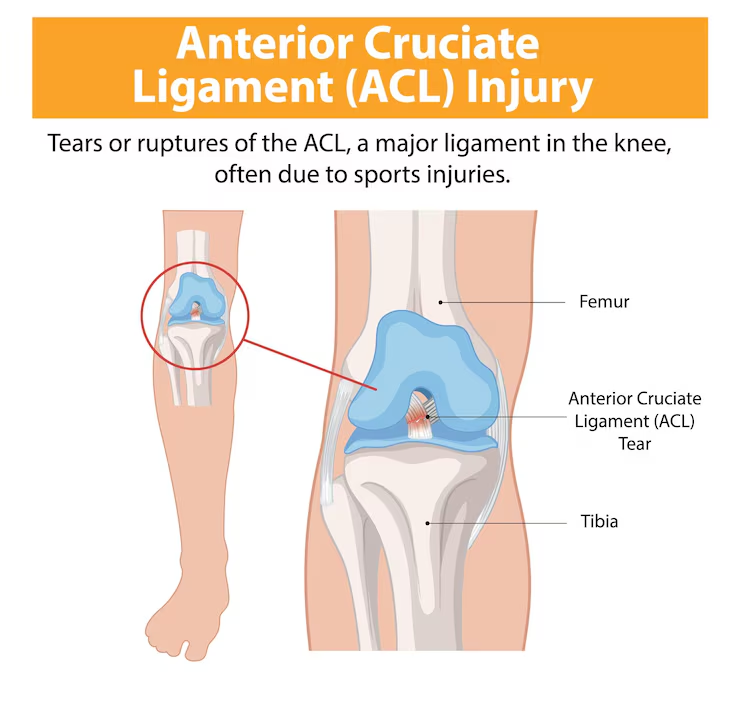
The anterior cruciate ligament, commonly called the ACL, is one of the major ligaments inside the knee. It connects the thighbone to the shinbone and helps keep the knee stable, especially during movements such as turning, jumping, stopping suddenly and changing direction.
An ACL injury happens when this ligament is stretched beyond its limit or torn. It commonly occurs during sports such as football, basketball, badminton and cricket, but it can also happen during everyday activities. Learn more about sports injuries and their treatment.
For example, the knee may twist while the foot remains planted on the ground. Landing awkwardly after a jump or suddenly changing direction can also place excessive stress on the ligament.
An ACL tear can occur on its own or along with an injury to the meniscus, cartilage or other knee ligaments. Therefore, knee pain after an accident should not automatically be assumed to be an ACL injury.
Common ACL Tear Symptoms
ACL tear symptoms can vary depending on the severity of the injury and whether other parts of the knee are affected.
A Popping Sensation in the Knee
Some people hear or feel a sudden pop in the knee when the injury happens. This may occur during a twisting movement, sudden stop or awkward landing.
A popping sensation alone does not confirm an ACL tear. However, if it is followed by swelling, pain or instability, it is a reason to seek medical evaluation.
Rapid Swelling After Injury
Swelling that develops within the first few hours after an injury can be a warning sign of significant damage inside the knee. The knee may look larger than usual and feel tight or uncomfortable.
Rapid swelling can occur with an ACL tear, but other injuries can cause it too. Avoid trying to diagnose the injury based only on swelling.
Pain and Difficulty Walking
You may experience pain immediately after the injury, particularly when standing, walking or bending the knee. Some people find it difficult to straighten the leg fully.
Pain levels vary. Being able to walk does not necessarily rule out a ligament injury, and severe pain is not required for an ACL tear to be present.
Knee Instability or Giving Way
One important symptom is knee instability. You may feel that your knee is shifting, slipping or unable to support your weight properly.
This sensation may become more noticeable when turning, walking on uneven ground or attempting sports activities. Repeated episodes of the knee giving way should be assessed because ongoing instability may increase the risk of further damage to structures inside the joint.
Stiffness and Reduced Movement
Swelling, pain and internal joint damage can make it difficult to bend or straighten the knee completely. You may also feel stiffness when getting up from a chair or attempting stairs.
If your knee becomes locked or you cannot move it normally after an injury, seek prompt medical assessment.
Could It Be Another Knee Injury?
An ACL tear is not the only condition that causes knee pain and swelling. A meniscus tear may cause pain along the joint line, catching or locking sensations. Other ligament injuries can cause instability in different directions, while a fracture may cause significant pain and difficulty bearing weight.
Some symptoms overlap, which makes a professional examination important.
How Is an ACL Injury Diagnosed?
A doctor will ask how the injury happened, when the symptoms started and whether the knee has felt unstable before. The knee may then be examined to assess movement, swelling and ligament stability.
An MRI may be recommended to assess the ACL and identify associated injuries. X-rays may be needed to check for fractures or other bone injuries. The appropriate investigations depend on the examination findings.
What Should You Do After a Suspected ACL Injury?
If you have injured your knee and suspect an ACL tear, take these precautions while arranging medical assessment:
- Stop sports and activities that involve running, jumping or turning.
- Avoid putting unnecessary weight on the injured leg, especially if the knee feels unstable.
- Apply a cold pack wrapped in a towel for short periods to help manage swelling.
- Elevate the leg when resting, if comfortable.
- Do not force the knee to bend or straighten, and avoid repeatedly testing its stability.
Seek urgent medical care if you cannot bear weight, have severe pain or swelling, notice an obvious deformity, or develop a cold, pale or numb foot. These symptoms may indicate a significant injury requiring prompt assessment.
Does Every ACL Tear Need Surgery?
No. Treatment depends on the extent of the tear, knee stability, activity level, associated injuries and the person's goals.
Some people may be managed without surgery through supervised physiotherapy, strengthening exercises and activity modification. This may be suitable in selected cases when the knee remains sufficiently stable for the person's daily activities.
ACL reconstruction may be considered when there is persistent instability, a high demand for pivoting activities, or associated injuries that affect knee function. The decision should be made after an orthopaedic assessment and discussion of the benefits, risks and alternatives.
Rehabilitation is important whether treatment is surgical or non-surgical. Patients should not return to sports simply because pain or swelling has reduced. Readiness depends on strength, knee control, functional testing and the treating clinician's advice.
ACL Tear Surgery Cost in Yeshwanthpur
The ACL Tear Surgery Cost in Yeshwanthpur can vary from one patient to another. There is no single cost that applies to every ACL injury.
Factors that may affect the overall expense include:
- Whether surgery is required and the type of procedure recommended.
- Whether the meniscus or other structures also need treatment.
- The graft selected for ACL reconstruction, where applicable.
- Hospital, operating theatre, anaesthesia and diagnostic charges.
- Physiotherapy, rehabilitation and follow-up appointments.
Ask the treating team for an individualised estimate that explains what is included and whether additional treatment may be required. A consultation is the best way to understand the available options and their likely costs.
When Should You See an ACL Specialist?
Arrange an orthopaedic assessment if your knee swells after a twisting injury, repeatedly gives way, remains painful or does not regain normal movement. Early evaluation can help identify the injury and guide a suitable treatment plan.
Patients looking for an ACL Tear Surgery Doctor in Yeshwanthpur or elsewhere in Bengaluru can consult a sports orthopaedic specialist for an assessment of knee stability, imaging findings and treatment options. Dr. Vijay Girish's website lists consultation at Vijaysheela Sports-Orthopaedics Centre on New BEL Road and at HOSMAT Hospital on Magrath Road. Confirm the preferred location and appointment details before visiting.
Contact Dr. Vijay Girish to arrange a consultation.
FAQs About ACL Tear Symptoms and Treatment
Can you walk with an ACL tear?
Some people can walk after an ACL tear, while others find weight-bearing difficult because of pain or swelling. Being able to walk does not rule out a significant knee injury.
How soon do ACL tear symptoms appear?
Pain and swelling may begin immediately or develop over the following hours. Knee instability may become more noticeable later when attempting to turn, run or change direction.
Is an MRI always needed to diagnose an ACL tear?
Not always. A clinical history and physical examination are important, and an MRI may be used to confirm the injury or check for damage to the meniscus, cartilage and other structures.
Can an ACL injury be treated without surgery?
Some ACL injuries can be managed without surgery, depending on knee stability, activity requirements and associated damage. An orthopaedic specialist can help determine whether non-surgical care is appropriate.
How much does ACL tear surgery cost?
The cost depends on the procedure, associated injuries, hospital charges and rehabilitation needs. An individual estimate should be requested after the injury has been assessed.
Understanding Your ACL Injury and Next Steps
Knee swelling, a popping sensation and repeated instability can be signs of an ACL injury, but only a proper clinical assessment can help establish the cause. Avoid returning to sports or strenuous activity while the knee remains unstable.
For guidance on ACL injury diagnosis and treatment options, consult a qualified orthopaedic specialist in Bengaluru. Understanding the injury early can help you make informed decisions about treatment, rehabilitation and returning to everyday activities.
Related Knee Care Articles and Services
- Why Does My Knee Hurt When Climbing Stairs? Causes, Symptoms & Treatment
- Knee Surgery and Treatment Options